This debate gets heated in overlanding circles in a way that’s slightly out of proportion to the actual stakes. At the end of the day, both get you off the ground (sort of), both work, and both have real tradeoffs. Here’s how we think about it.
Ground Tent — What It Has Going For It
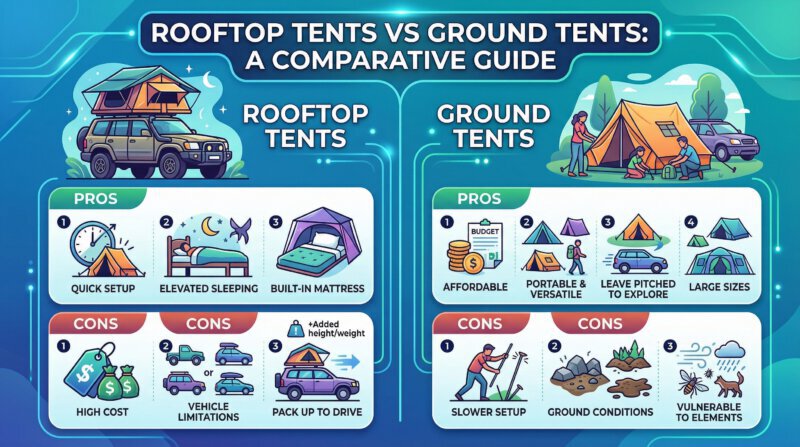
Cost is the obvious one. A quality four-season ground tent runs $200–$600 depending on brand and spec. A quality rooftop tent starts at about $1,000 and goes well past $3,000 for the nicer hard-shell options. If you’re starting out, that spread buys a lot of other gear.
Weight capacity flexibility is real. When four people are sharing a campsite, ground tents scale. You can split up, spread out, share a larger tent. The rooftop tent is a fixed situation — it holds who it holds.
Setup on technical terrain is sometimes easier with a ground tent. A rooftop tent requires a reasonably level vehicle. Ground tents can go in spots where you can’t park flat.
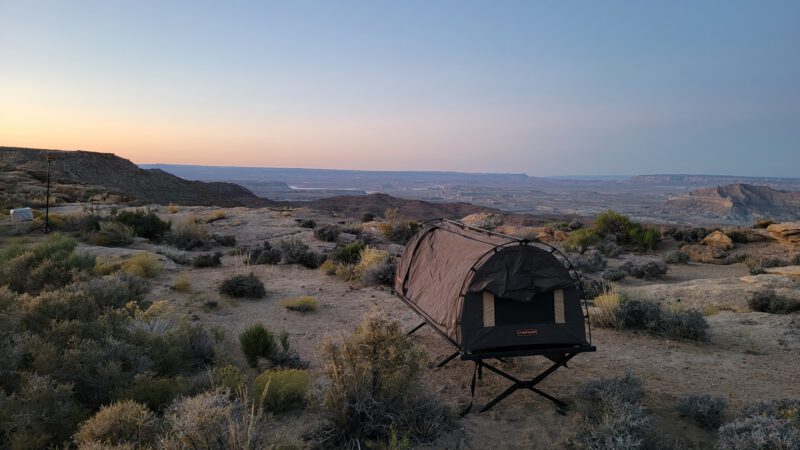
Ground tent at a high desert camp — a quality four-season tent handles desert temperature swings well and doesn’t add the weight penalty to your rig that a rooftop unit does.
Rooftop Tent — What It Has Going For It
Speed. Rooftop tent owners consistently report setup in a few minutes: pop the roof, unfold the ladder, done. When you’re rolling in late after a long drive and just want to stop, that matters more than you’d think.

Getting off the ground in genuine desert conditions — sand, rocks, uneven terrain — means you’re not fighting to find a flat spot for the tent footprint. The rig is close enough to level, the tent unfolds, you sleep.
We are also seeing a whole bunch of roof-top campers adopting Diesel Heaters to pump hot air into the rooftop condo to warm up those cool mornings.The sleeping surface is better than most ground pads by a meaningful margin. Most rooftop tents include a decent foam mattress. Your ground sleep system usually involves more gear to reach the same comfort level.
The Critter Reality Check
What We Run
We’ve run different setups over the years and currently the Crashpad Swag tent. The reasoning: we do primarily multi-day remote runs, we’re often rolling in late, and the setup and breakdown time adds up across a long trip. This setup breaks down fast and rolls back up ready to go and all the padding, bedding and blankets are all ready to go, think of it like a bedroll. With the ‘Stretcher” it is a very comfortable set up and the smaller quarters, and canvas keeps you nice and warm on those cold desert nights.
Gear Note
The downside we live with: It’s big to pack in smaller vehicles like our Jeep but over time we’ve have adapted my pack-out routine to accommodate the tent size.

We have put this tent through its paces in all kinds of conditions and combined with the Crashpad Stretcher this setup is as close to sleeping in your own bed at home. We’ve spent some very cold nights and have always been warm and comfortable. It has great ventilation for those slightly warmer nights.
The Trailer Question
There’s a third option that keeps coming up: a trailer-mounted tent or a full pull-behind camper. We towed an off-road trailer for years before downsizing to a swag. If you’re thinking about the full camp setup, our cooler vs. fridge breakdown covers another gear decision in the same category. More living space, and it detaches when you need to run technical terrain without the weight overhead. It’s a real option for some setups, and we’ll cover it in its own article.

We pulled this Black Series Dominator around Southern Nevada for a few years and camped it down by the Colorado, Death Valley and high up in the Spring Mountains and had a ton of fun in this rig. Be aware when choosing when to bring something like this with a group of overlanders, it is big, huge when scaled with singletrack trails and sluggish compared to rigs not towing.
What to Look For
The Call
For weekend runs or anyone getting into overlanding, start with a quality ground tent and put the difference toward a better recovery kit or communication setup. The RTT is a quality-of-life upgrade, not a capability upgrade. Build the capability first.
