Mojave Desert Wildlife Guide: What You'll Actually Encounter
Tim Davis|July 5, 2026|22 min read
Most encounters with Mojave Desert wildlife happen at camp, not on the trail — a coyote at the tailgate, a scorpion under a boot, eyeshine at the edge of headlamp range. We built this guide around all 27 species you're likely to run into across the corridor: current range, active season, real risk level, and what to actually do if you cross paths. The fauna here has adapted to conditions that would kill most species outright — 60°F swings between day and night, months between rain, summer heat past 120°F in the low desert. What's left is tough, specialized, and more varied than most trip reports let on.
Creosote flats at 1,500 feet grade into Joshua tree woodland at 4,000, pinyon-juniper forest at 6,000, and ponderosa pine above that in ranges like the Spring Mountains. Each zone supports a distinct wildlife community, and what you encounter depends as much on elevation as timing — see our guide to the best seasons across Mojave regions if you're planning around wildlife activity specifically.
It's organized by species group below — reptiles, mammals, birds, arachnids — with a jump-to index if you already know what you're looking for. Each entry covers range, season, and risk tier, plus a link to the fuller field notes. Pair it with our overlanding etiquette guide for the broader rules on sharing the trail with what lives on it.
Prime reptile territory — rocky terrain and high daytime heat suit cold-blooded species well. We find the most activity early morning, late spring through early fall, before animals retreat to shade.
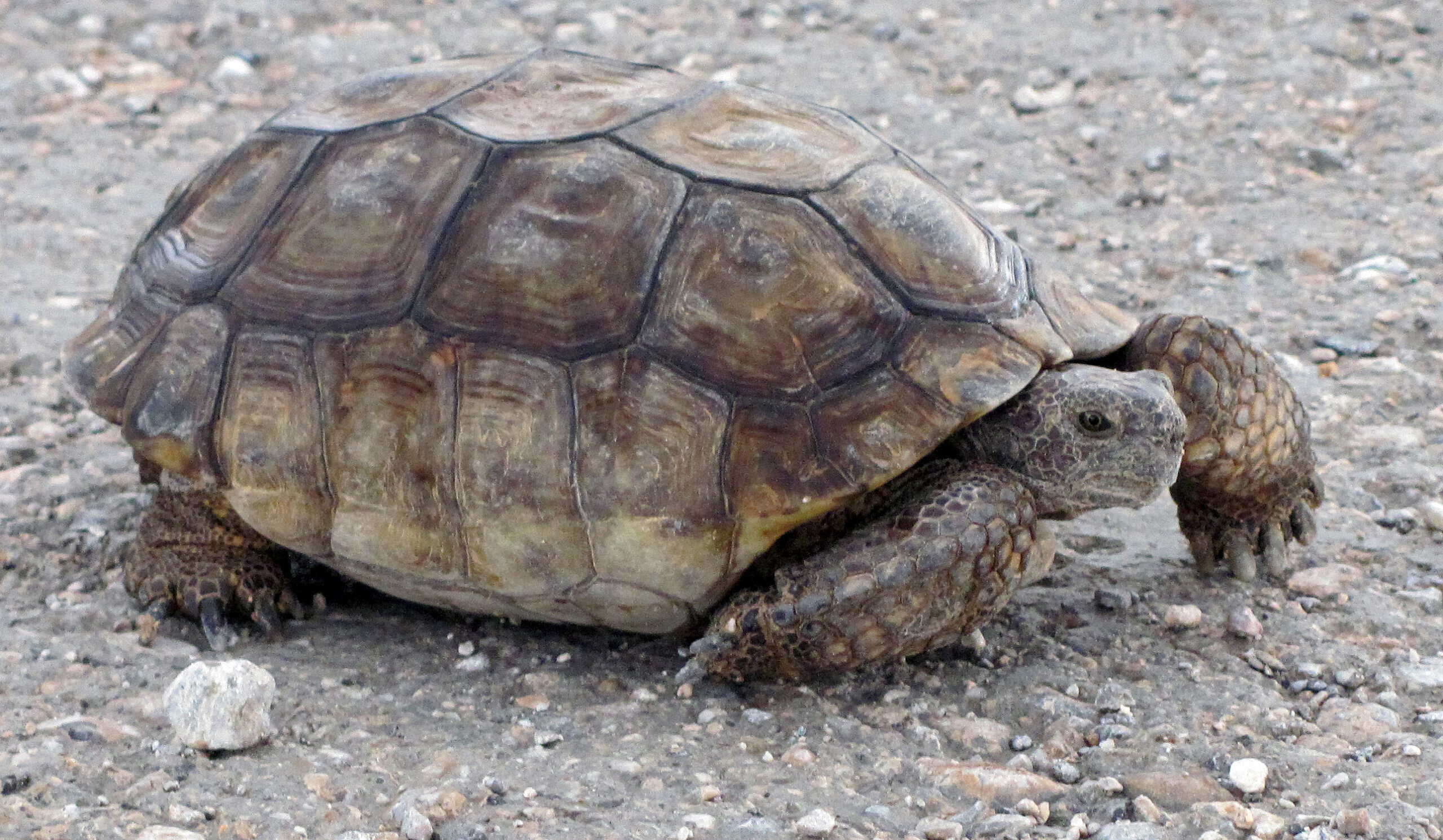
Desert Tortoise
Harmless
Gopherus agassizii
Creosote flats & rocky terrain, below 4,000 ft
Active Mar–May mornings; brief fall activity
Spends ~95% of life underground. Slow-moving and camouflaged against rock; federally threatened.
Move it the direction it was heading — never turn it around. Handling is prohibited except in emergencies.
Chuckwalla
Harmless
Sauromalus ater
Rocky terrain, boulder fields & canyon walls
Mornings basking, afternoons browsing
Second-largest lizard in North America. Herbivore. Wedges into crevices and inflates its body when threatened.
Completely harmless — watch from a distance and move on.
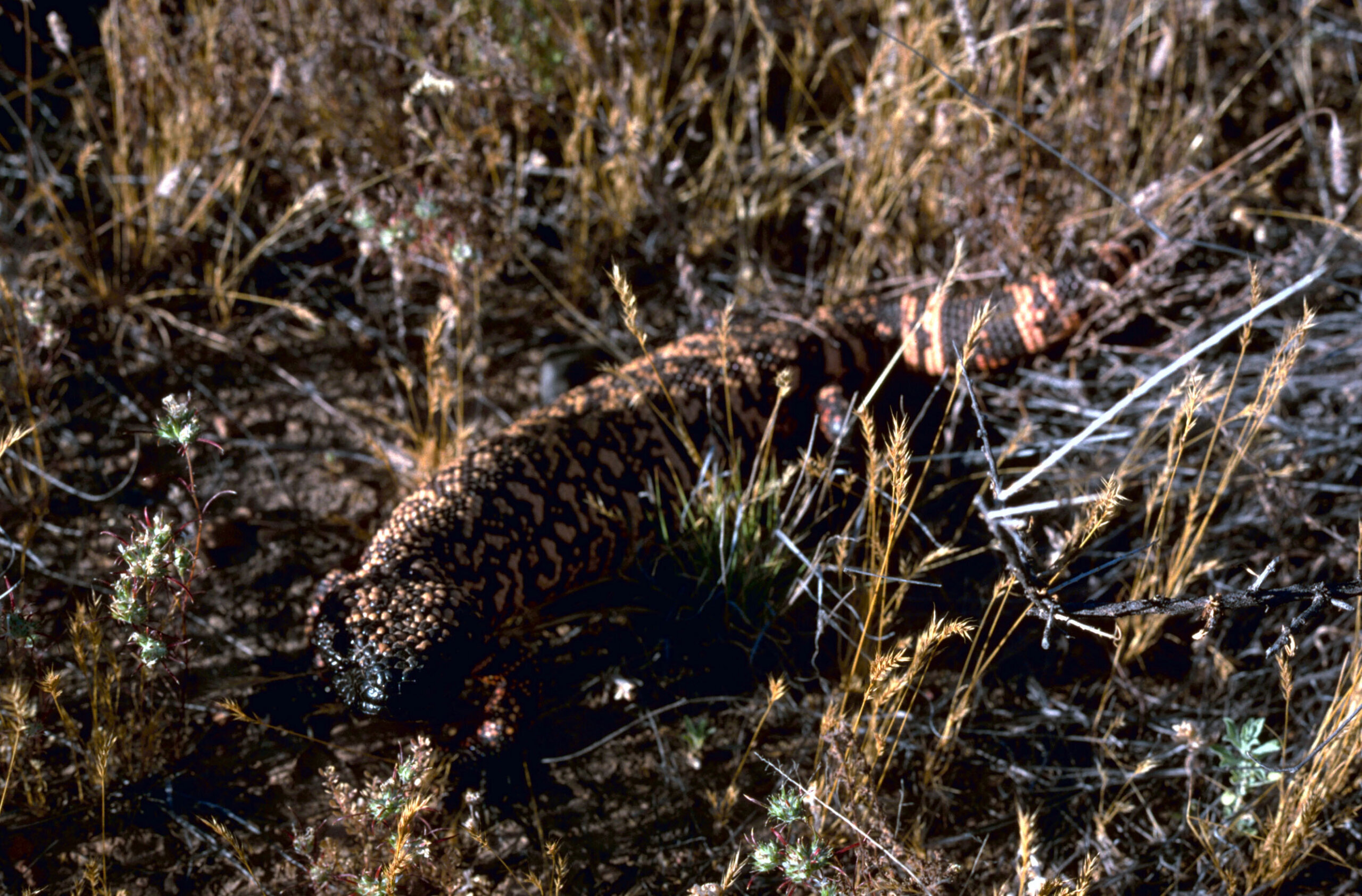
Gila Monster
Caution
Heloderma suspectum
Rocky foothills, Arizona & eastern Mojave
Spring–early summer; underground ~98% of life
One of only two venomous lizards in North America. Slow, reclusive, strikingly banded in black and orange.
Bites are rare and nearly always from handling. Venom is delivered by chewing, not injection — leave it alone.
Horned Lizard
Harmless
Phrynosoma platyrhinos
Sandy & gravelly terrain, most elevations
Active through the warm months
Flat, spined, and camouflaged. Eats harvester ants; squirts blood from its eyes as a last defense.
Harmless. A healthy sighting is a good sign of intact desert habitat.
Whiptail Lizard
Harmless
Aspidoscelis spp.
Sand & gravel, most elevations
Active during the hottest part of the day
Fast, striped, and nervous. Several species reproduce via parthenogenesis — all-female populations.
No interaction needed — usually gone before you register it.
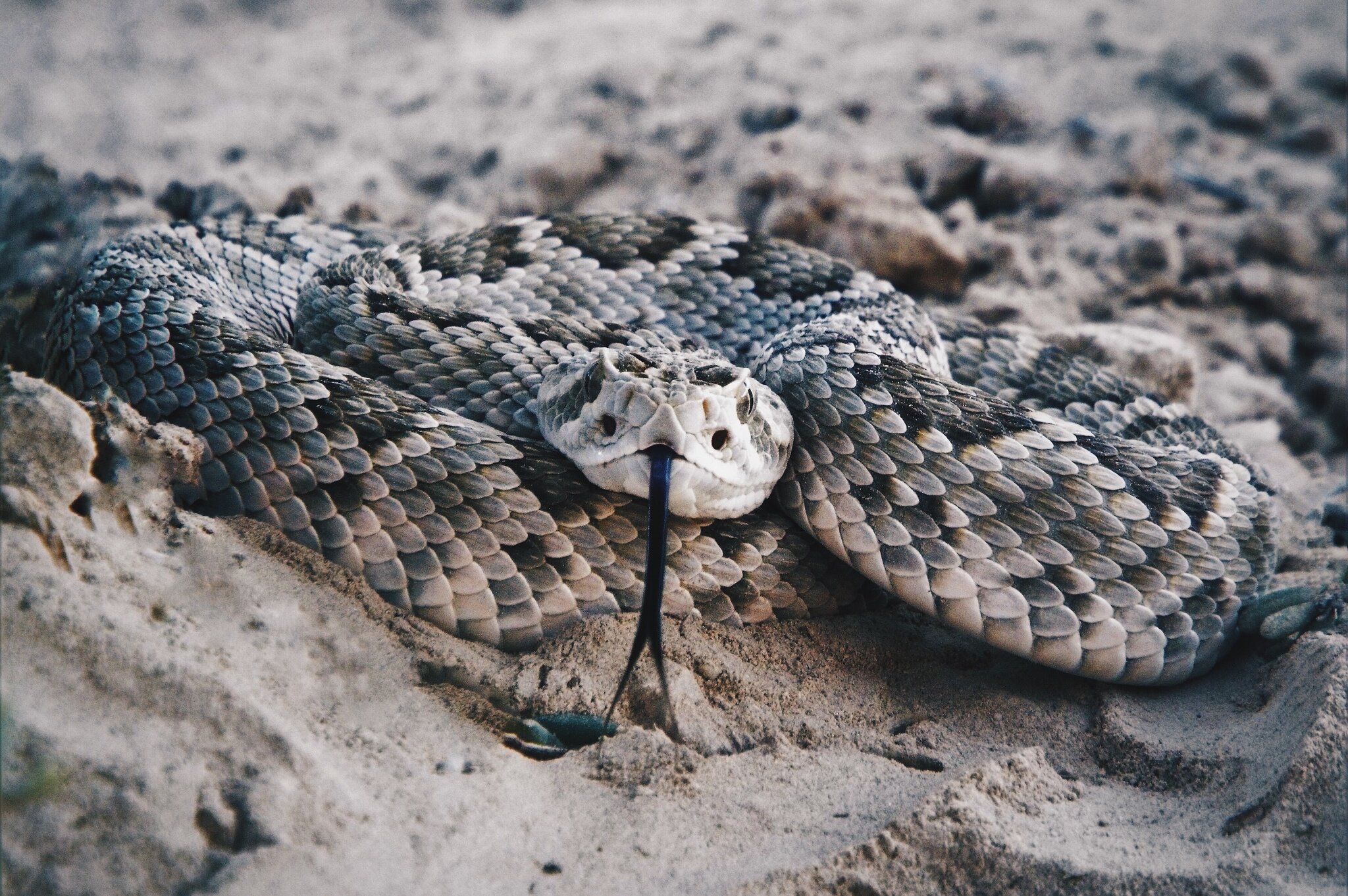
Mojave Rattlesnake
High Risk
Crotalus scutulatus
Below 8,000 ft, throughout the corridor — including Joshua Tree National Park and Mojave National Preserve
Apr–Oct; nocturnal in peak summer
Most potent venom of any North American rattlesnake — neurotoxic in addition to standard hemotoxic.
Stop, locate, walk around with clearance. If bitten: immobilize limb below heart, evacuate immediately — no cutting or tourniquets.
Sidewinder
High Risk
Crotalus cerastes
Sandy terrain — dunes, washes, open flats
Primarily nocturnal in summer
Named for its lateral looping locomotion across sand. Smaller than the Mojave rattlesnake, 18–30 in.
Same protocol as all rattlesnakes — stop, locate, give clearance, move on.
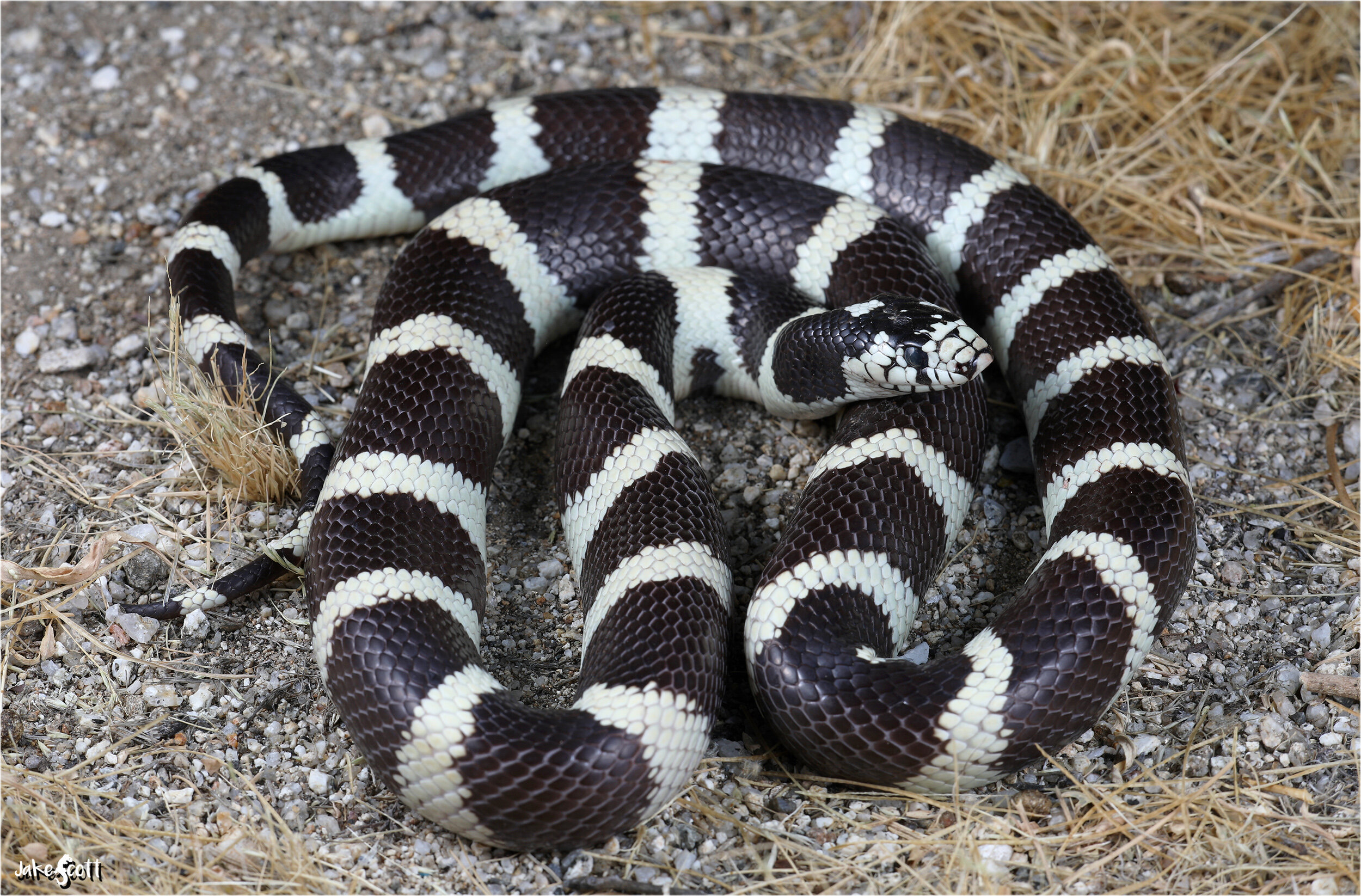
California Kingsnake
Beneficial
Lampropeltis californiae
Throughout the corridor, most elevations
Active year-round
Highly resistant to pit viper venom — actively hunts rattlesnakes. Vibrates its tail to mimic a rattle when threatened.
Fully protected. If you find one in camp, let it work.
Wildlife by Season
Spring
March – May
Peak activity across every species group. Tortoises emerge, migratory birds pass through, reptiles are active by mid-morning. The best season for sightings overall.
Summer
June – August
The corridor goes nocturnal above 110°F. Rattlesnakes, kit foxes, and kangaroo rats are active after dark; plan wildlife viewing for headlamp hours.
Fall
September – November
Diurnal activity returns. September–October is tarantula walkabout season. Migratory raptors move through; bighorn rut begins in November.
Winter
December – February
Reptiles go inactive. Raptors concentrate — wintering eagles and hawks. Coyotes and bobcats are more visible at mid-day.
Mammals of the Mojave Corridor
We've crossed paths with everything from the smallest canid in North America to an apex predator out here — the corridor's mammals span nearly every activity pattern — day, night, and everything in between.
Coyote
Caution
Canis latrans
Everywhere in the corridor
Crepuscular & nocturnal
Curious and opportunistic — the one large predator that has expanded its range as others contracted.
Keep food in hard containers. If one approaches without hesitation, be loud and make the encounter unpleasant.
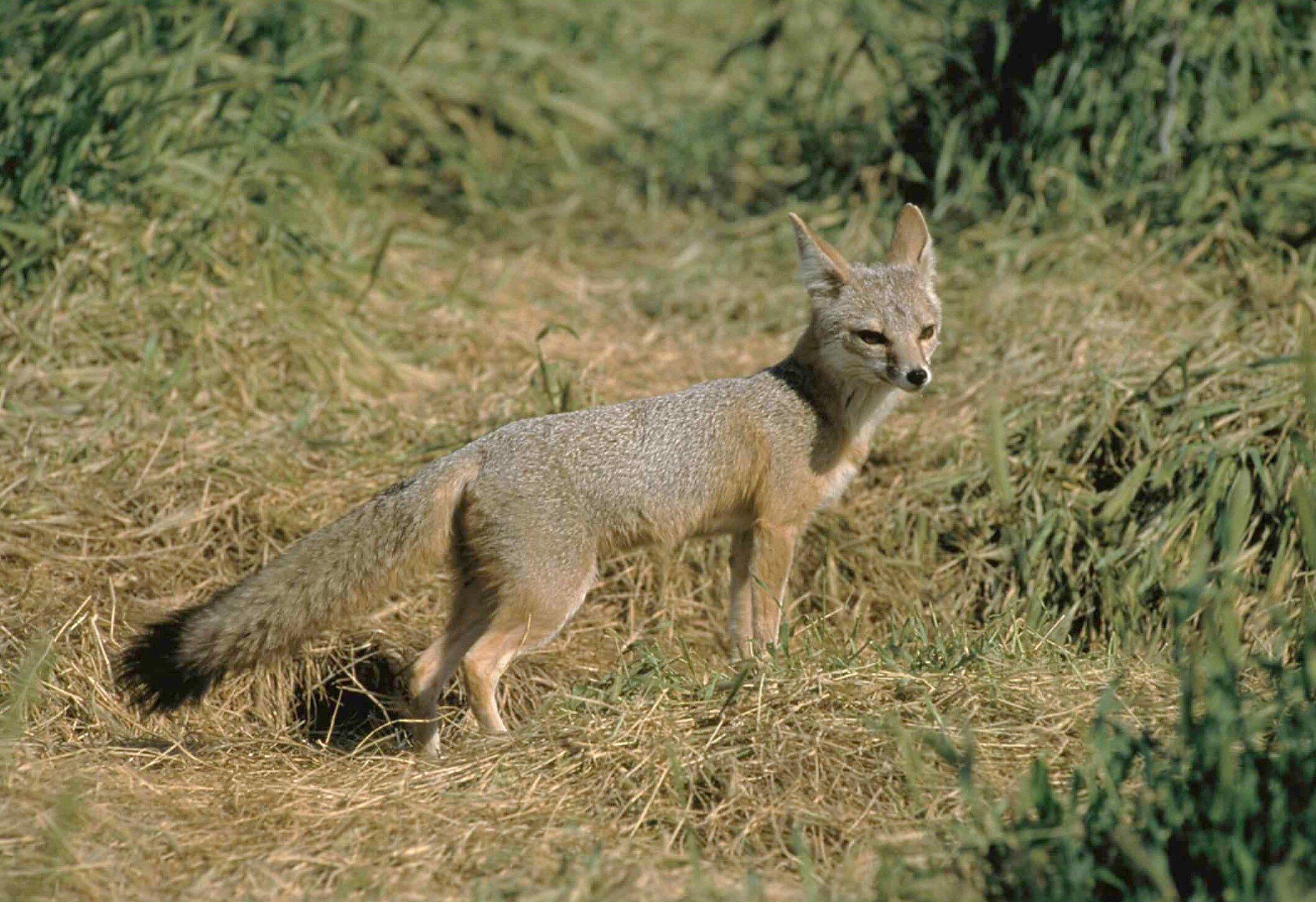
Kit Fox
Harmless
Vulpes macrotis
Open flats & sandy washes
Strictly nocturnal
Smallest wild canid in North America. Huge ears radiate heat and locate prey underground.
Watch for paired eyeshine 20–30 yards out at night. Curious, not a camp threat — leave it alone.
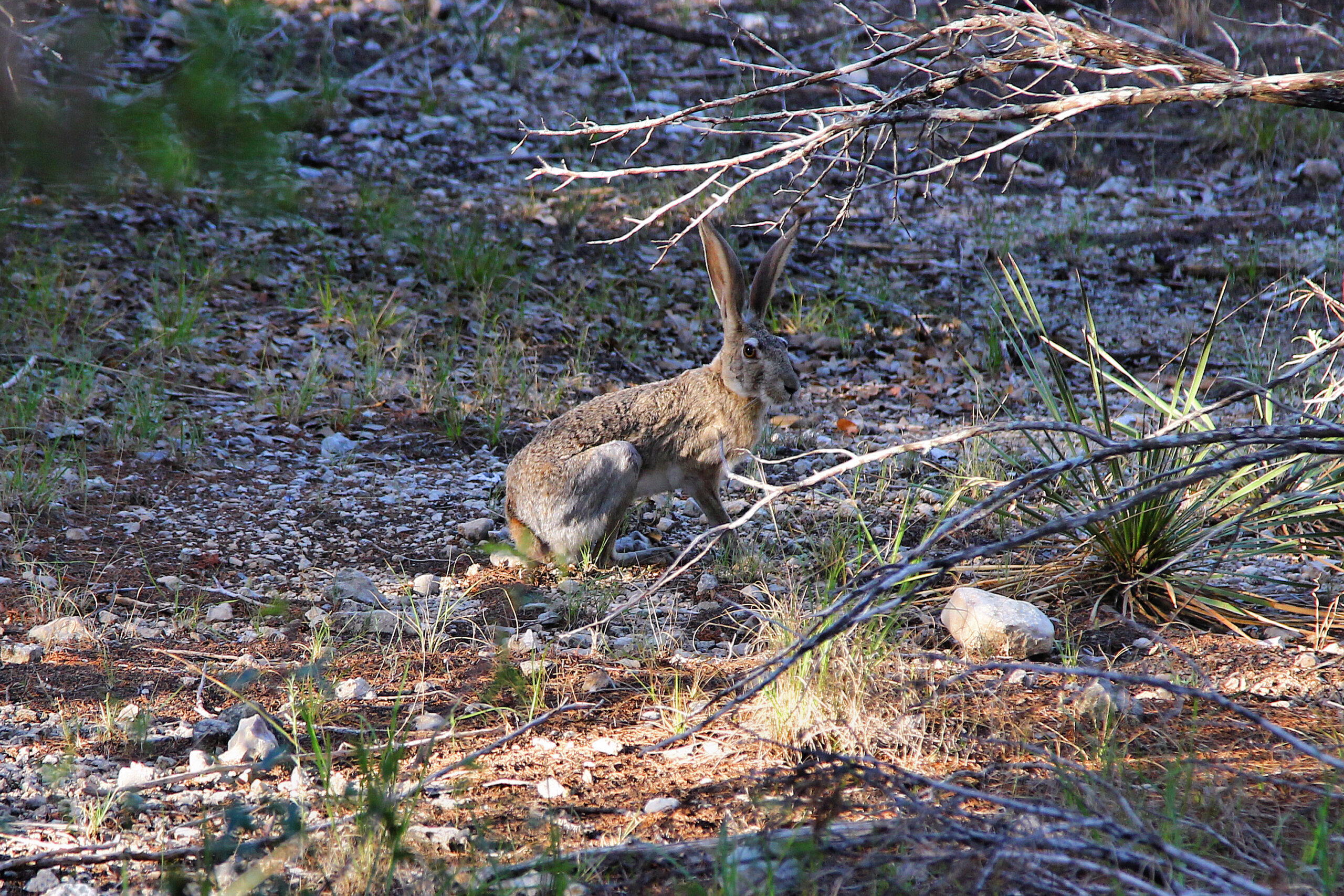
Black-tailed Jackrabbit
Harmless
Lepus californicus
Brush & open terrain, all elevations
Year-round, most active dawn/dusk
A hare, not a rabbit — 35 mph with 10-ft leaps. Prey for nearly everything in the Mojave.
No protocol — frequent sightings mean healthy habitat.
Desert Kangaroo Rat
Harmless
Dipodomys deserti
Sandy desert terrain
Nocturnal
Bipedal, and survives without ever drinking — all moisture metabolized from seeds.
Look for the silhouette in headlamp light, moving through sandy washes at night.
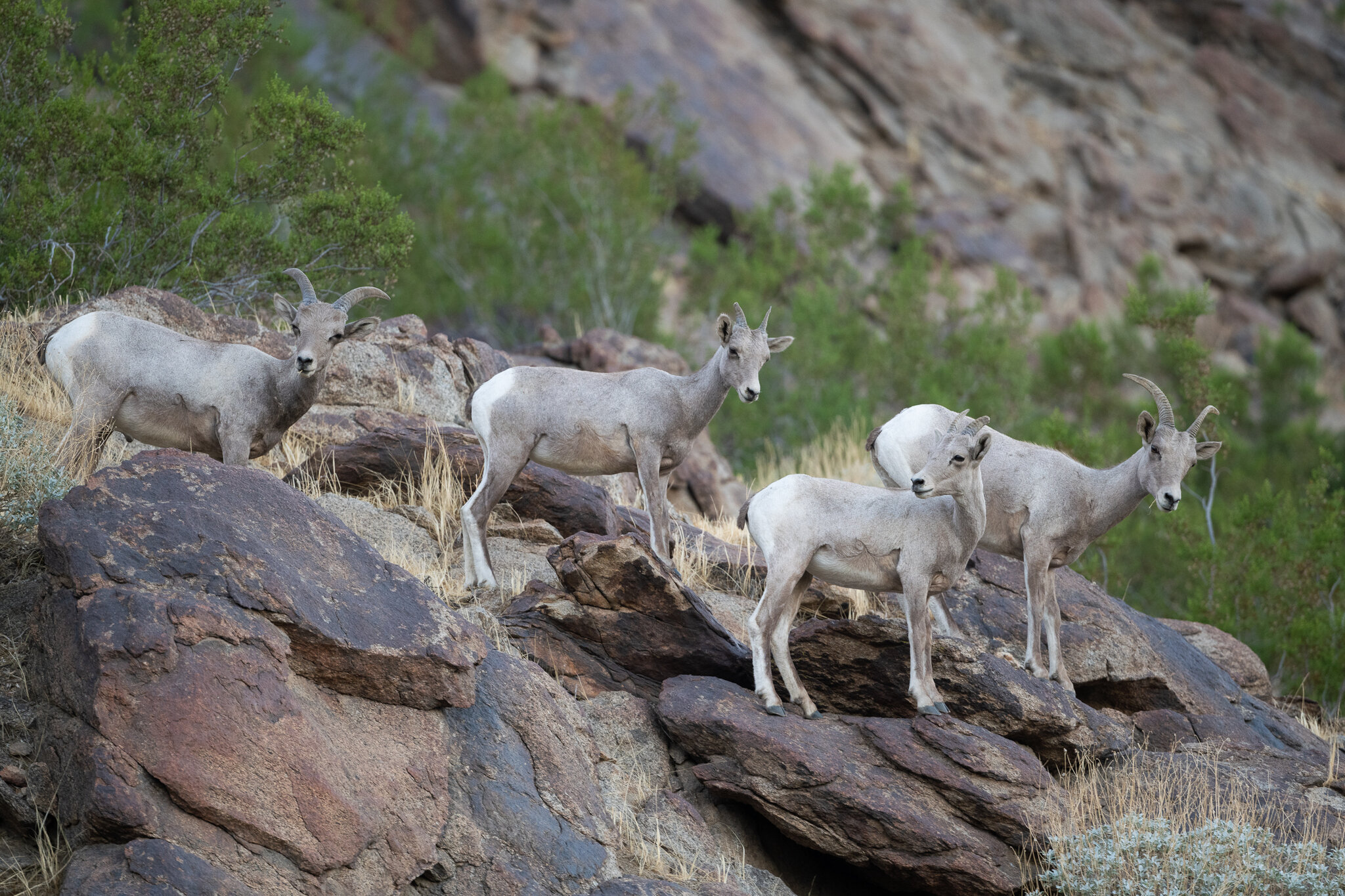
Desert Bighorn Sheep
Keep Distance
Ovis canadensis nelsoni
Rocky ranges — Spring Mtns, McCullough, Black Mtns
Rut Nov–Dec, active dawn/dusk
Uses steep rock as predator refuge. Rams carry horns weighing up to 30 lbs.
Keep 100 yards minimum, especially ewes with lambs. If sheep block a trail, wait — they'll move.
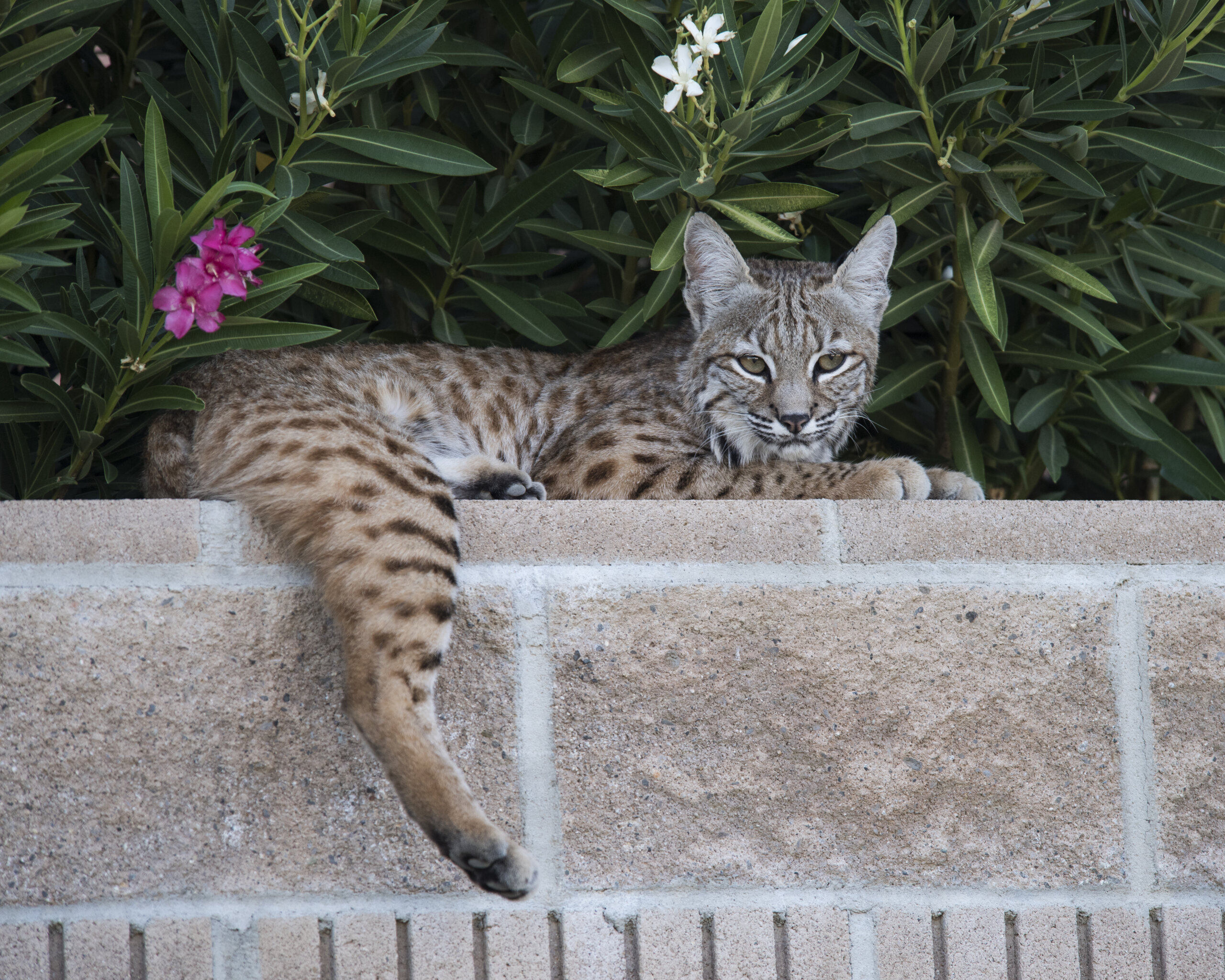
Bobcat
Harmless
Lynx rufus
Throughout the corridor, most elevations
Crepuscular to nocturnal
Roughly twice the size of a housecat, spotted, short-tailed. Solitary and secretive.
Not a threat to adults. Keep dogs leashed in wildlife-active areas.
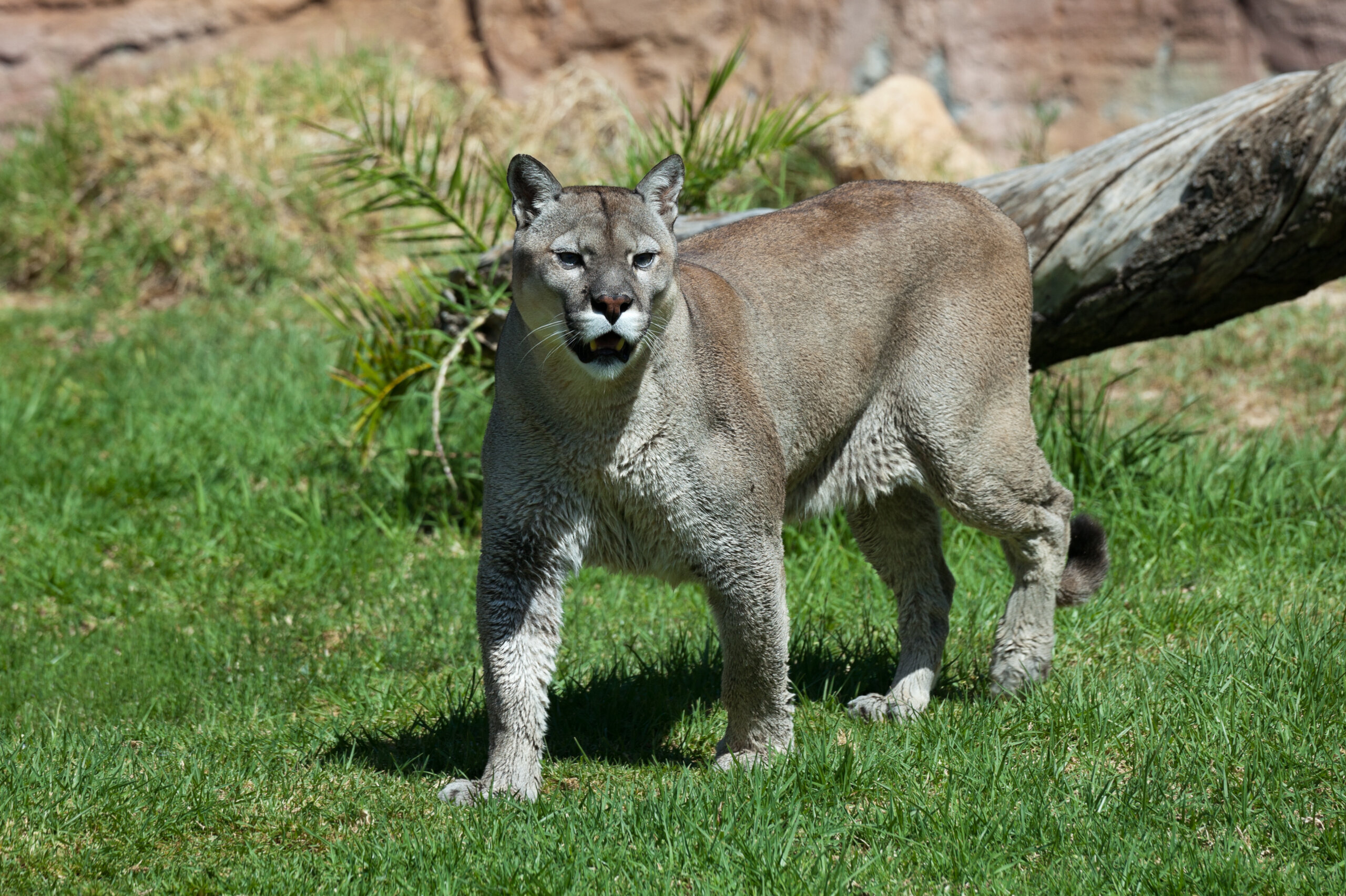
Mountain Lion
High Risk
Puma concolor
Canyon systems with deer & bighorn
Solitary, year-round
Ambush predator — stalks from above and behind. Sightings are uncommon; attacks are rare.
Stop, stand tall, don't run. Fight back if attacked — lions that are fought back against typically disengage.
Wild Horses & Burros
Keep Distance
Equus ferus / Equus asinus
BLM Herd Management Areas, NV & eastern Mojave
Most active dawn/dusk near water
Move in bands led by a dominant stallion. Federally protected since 1971.
Stay in your vehicle. Stallions defending a band will charge.
Wildlife Encounter Protocol
Rattlesnake on Trail
Stop moving, locate the snake, walk around it with several feet of clearance. Don't try to move or kill it — most bites happen to people who do.
Mountain Lion at Close Range
Stop, don't run. Stand tall, open your jacket, hold gear overhead, maintain eye contact, back away slowly. Fight back if it attacks.
Coyotes in Camp
Yell, wave your arms, throw something near it (not at it). One that approaches without hesitation has been fed before — make the visit unpleasant.
Bighorn Sheep, Gila Monsters, Wild Stallions
Same rule for all three: keep distance, don't approach. 100 yards for bighorn, several feet for Gila monsters, stay in your vehicle for wild stallions.
Birds of the Mojave Corridor
The corridor sits within the Pacific Flyway, and resident breeding species alone number well over 100. You don't need to be a birder to find these worth watching for.
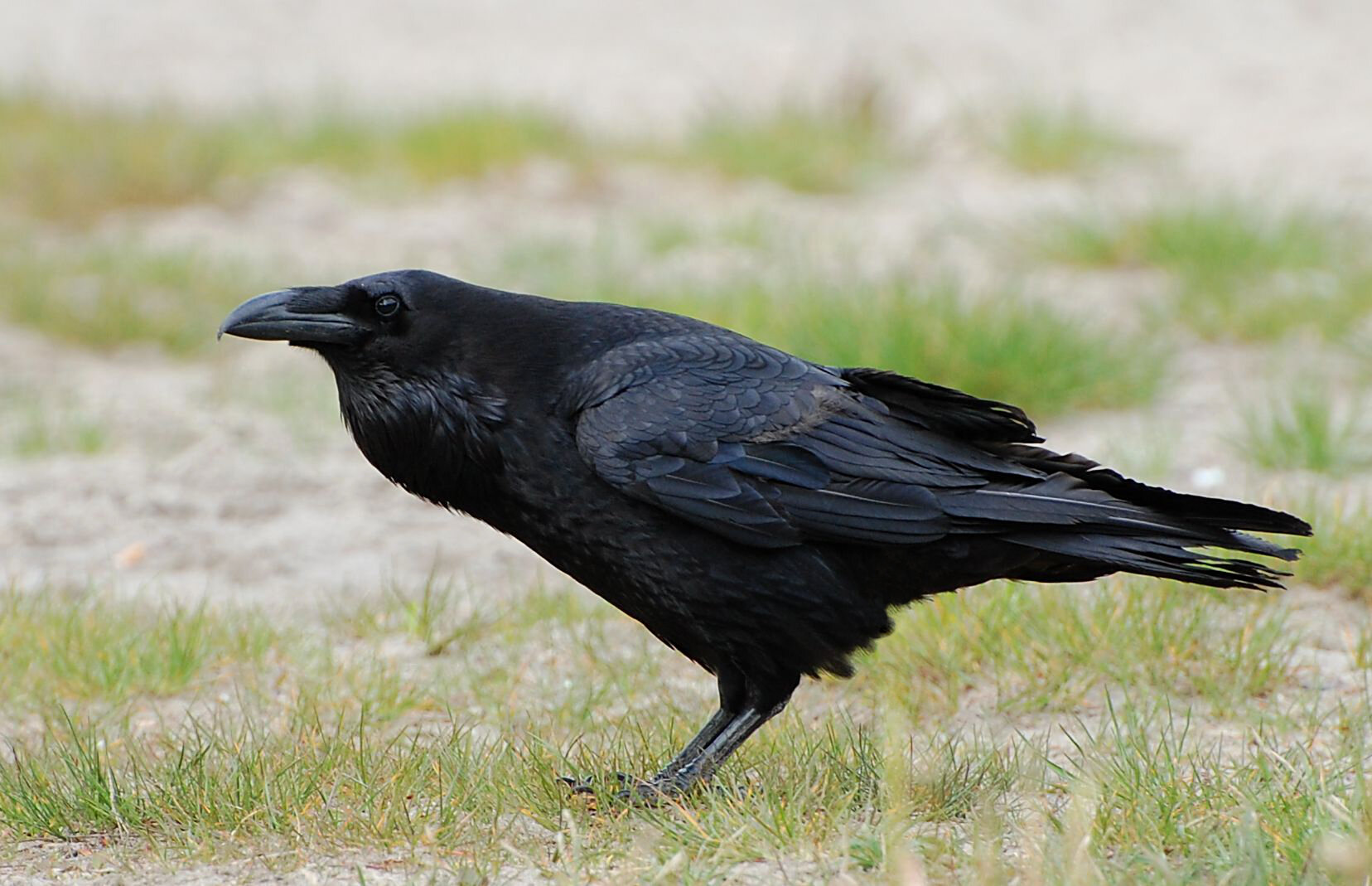
Common Raven
Camp Raider
Corvus corax
Ubiquitous, year-round
Active year-round
Most intelligent bird in the Mojave — problem-solving on par with great apes. Mates for life.
Keep food hard-sided. A raven will find the weak point in your camp.
Greater Roadrunner
Harmless
Geococcyx californianus
Lower elevations, brushy washes
Active year-round
A ground-dwelling cuckoo, not the cartoon. Hunts lizards and small snakes, even venomous ones.
Bold around still humans — sit quietly and one may investigate camp.
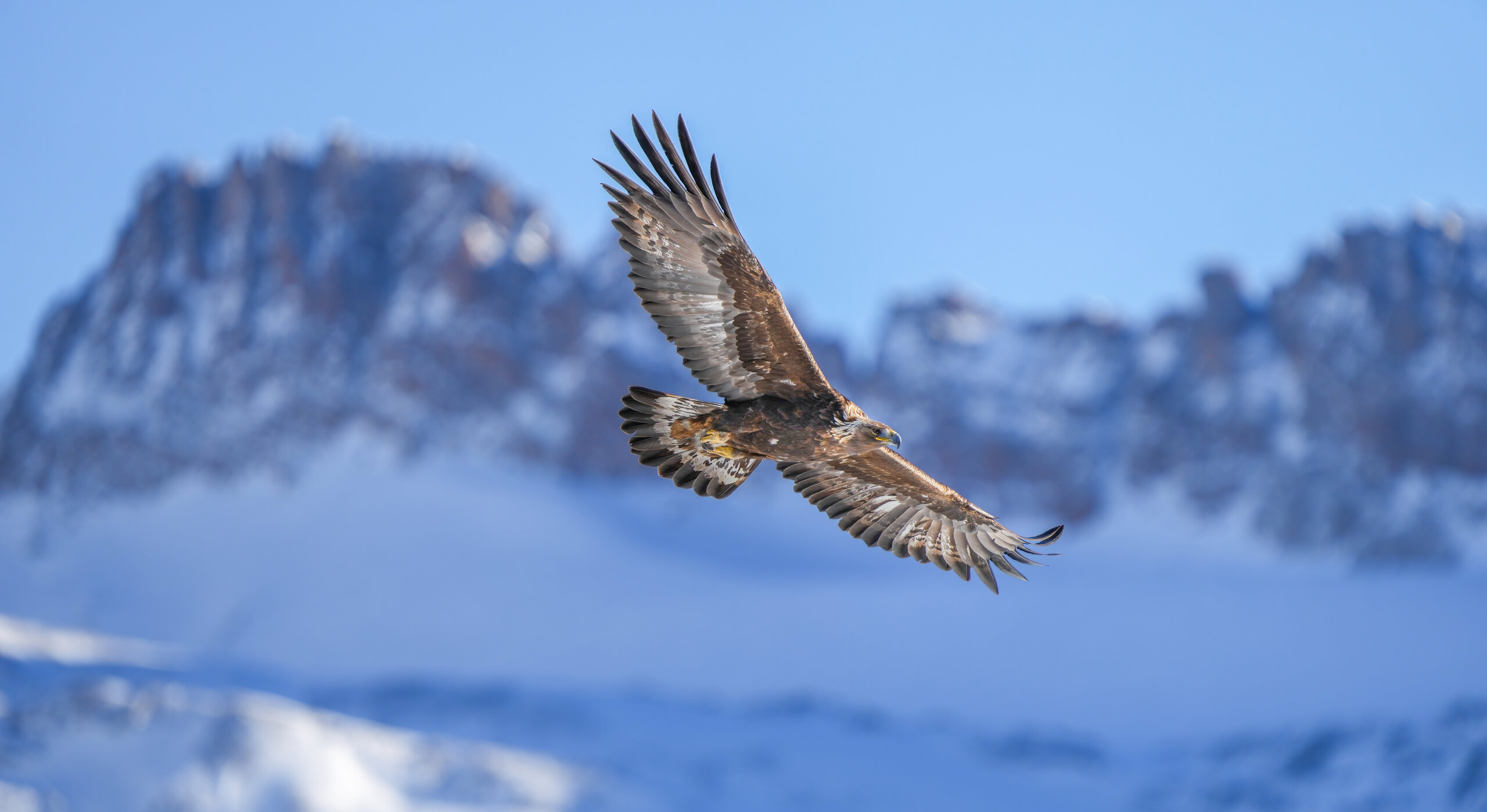
Golden Eagle
Harmless
Aquila chrysaetos
Open terrain, cliff-face nests
Present year-round
Largest raptor in the corridor — wingspan to 7.5 ft. Hunts in coordinated pairs.
Best seen with binoculars at sunrise, sitting still in open country.
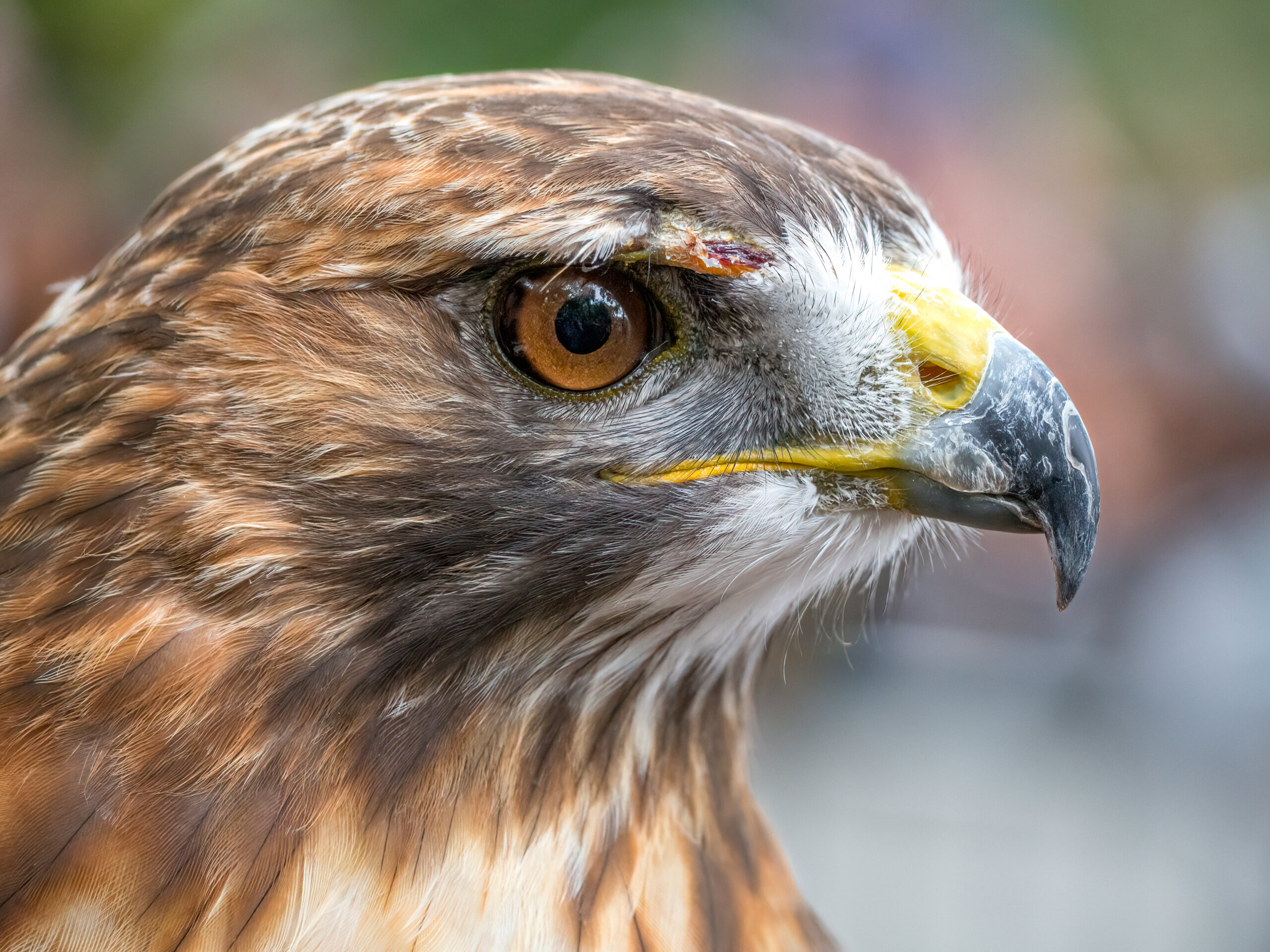
Red-tailed Hawk
Harmless
Buteo jamaicensis
Throughout the corridor, perches on poles & posts
Present year-round
Most common large raptor. Its scream is the stock "eagle sound" in movies.
Scan utility lines on any highway approach to a trailhead.
Gambel's Quail
Harmless
Callipepla gambelii
Brushy terrain, lower elevations
Breeds in spring
Moves in coveys of 10–40. Male has a comma-shaped topknot and chestnut cap.
Common at dawn near water sources — fast on foot, reluctant to fly.
Burrowing Owl
Harmless
Athene cunicularia
Open flats near Joshua tree woodland
Active by day — unusual for owls
Nests in abandoned tortoise burrows. About robin-sized; bobs its head as you approach.
Keep distance at the burrow entrance — increasingly uncommon, worth a stop.
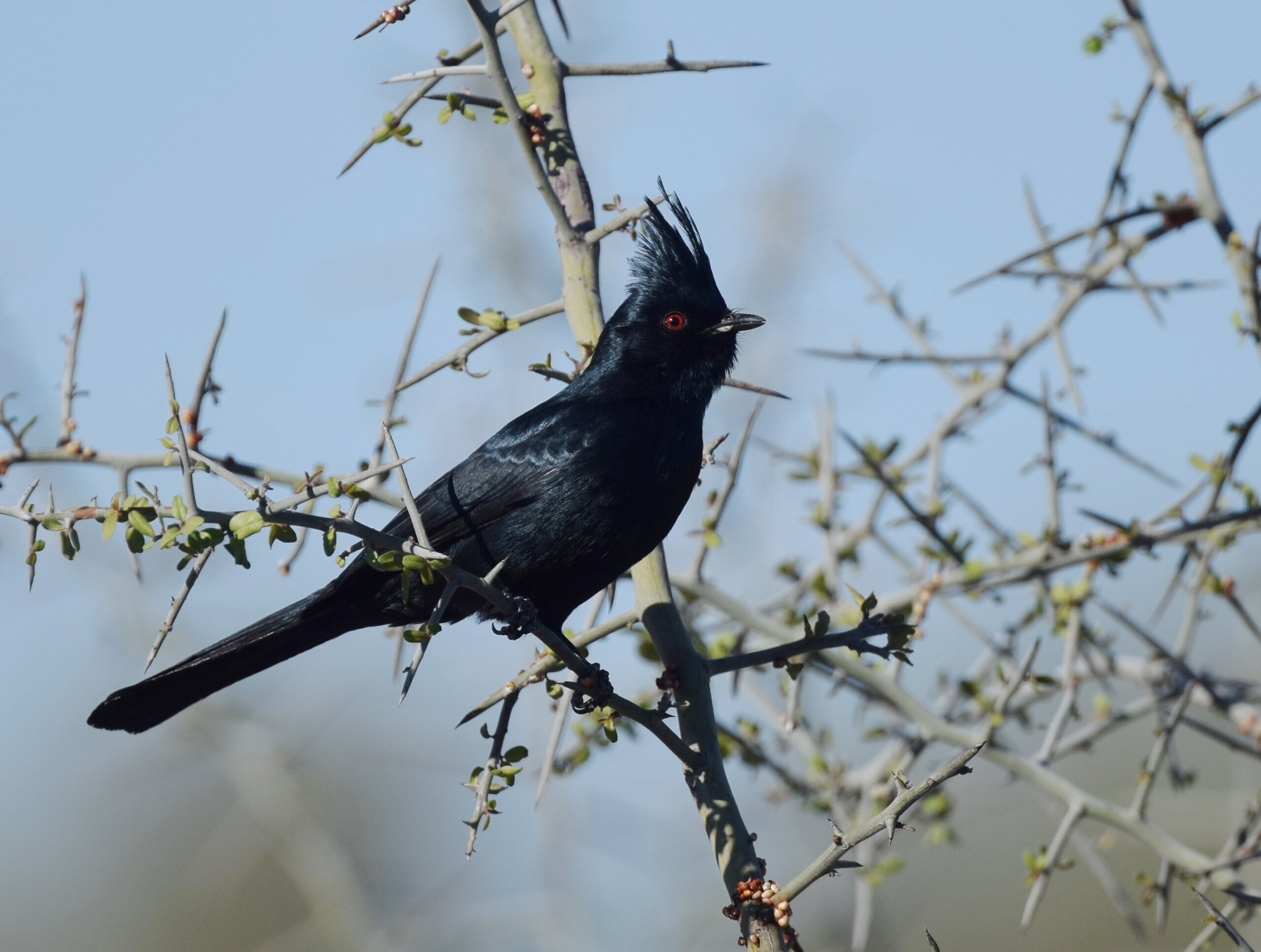
Phainopepla
Harmless
Phainopepla nitens
Desert washes with ironwood & palo verde
Present year-round in lower desert
Male is jet black with red eyes and a crest. Feeds almost entirely on mistletoe berries.
Look for the black silhouette atop ironwood trees — one of the easiest desert birds to ID.
Loggerhead Shrike
Harmless
Lanius ludovicianus
Open scrub & fence lines
Present year-round
The "butcher bird" — impales prey on thorns or barbed wire to cache or eat.
Look for the prey cache before the bird — a lizard on a cholla spine usually means a shrike is near.