The overlanding content world has a skewed view of what’s required. Between the influencer builds with $15,000 in suspension and the YouTube rigs that look like they’ve been sponsored into existence, it’s easy to come away thinking you need a fully built rig to get into the dirt. You don’t. Most of what’s interesting in the Mojave corridor is accessible to a stock or near-stock vehicle with a driver who understands its limits. The build follows the experience — not the other way around.
Note
Start With the Tires

If there’s one modification that genuinely changes what a stock 4×4 can do, it’s tires. Stock all-season tires on a Wrangler are adequate on pavement and poor in real dirt conditions. A set of proper all-terrain tires — BFG KO2, Falken Wildpeak AT3W, Nitto Trail Grapplers, Cooper AT3 XLT — opens up a significant range of desert terrain that stock rubber handles badly.
Budget: $800–$1,200 for a set of four in a size appropriate for your vehicle (staying at or near stock diameter avoids gearing complications). Add a proper air-down kit — a set of EZ Deflators ($30) for airing down quickly and a portable compressor for airing back up ($80–$150 for a quality unit). This combination does more for capability than almost anything else you could spend the same money on.
Recovery Gear: The Non-Negotiable
You will get stuck eventually. The question is whether you have the gear to get yourself or a travel companion unstuck, or whether you’re calling for a tow from a remote desert trail. A basic recovery kit doesn’t require a winch — especially if you’re running with another vehicle, which is the right call when you’re starting out.
Budget Recovery Kit (~$300)
Shelter and Sleep
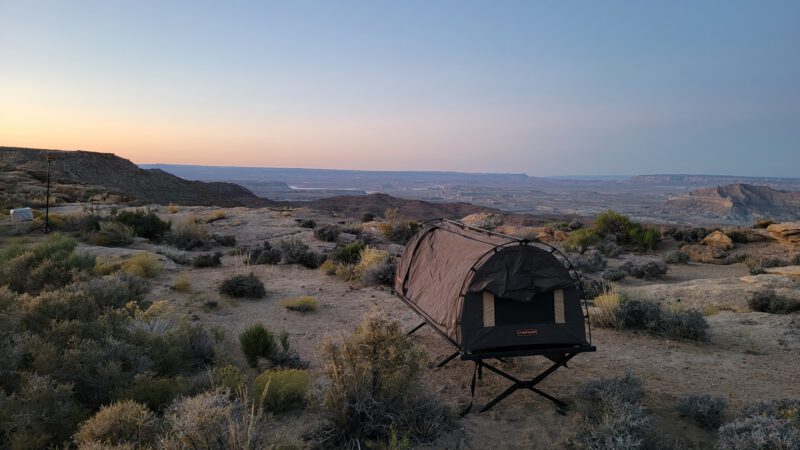
Rooftop tents look great and they are genuinely convenient — setup time under a minute, off the ground, good insulation. They also start at $800 for a budget unit and run to $4,000 for premium. For a budget start, they’re not the priority.
A quality ground tent ($150–$300 for a 3-season 2-person tent from Big Agnes, CrashPad, REI, or MSR) and a good sleeping bag ($100–$200 for a 20°F-rated down or synthetic bag) cover the desert camping requirement at a fraction of the cost. Add a sleeping pad for insulation from the ground. The total spend is $350–$600 versus $1,200+ for even an entry-level RTT setup. Put the saved money toward tires or recovery gear, which actually affect safety. The RTT comes later when the other priorities are handled.
Communication First, Everything Else Second
This is the one place where budget overlanders consistently underinvest. A satellite communicator — Garmin inReach Mini 2 at $350, or a Zoleo at $200 — is the single piece of gear that covers the scenario where everything else fails. Broken down in the desert with no cell service and no way to call for help is a genuinely dangerous situation. A satellite communicator makes it an inconvenient situation. At $200–$350 plus $15–$25/month for a plan, it’s the most important gear purchase on this list. Also T-Mobile currently offers “T-Satellite” which allows SMS messaging reasonably priced.
Pro Tip
The Priority Order
If we were starting from a stock capable 4×4 with $3,000 to spend: tires first ($1,000), recovery boards and basic recovery kit ($300), satellite communicator ($350), first aid kit ($100), a quality cooler or entry-level 12V fridge ($150–$350), and a ground tent/sleep system ($400). That leaves a few hundred dollars for incidentals and leaves the rig capable of multi-day desert running in all but the most technical terrain.
The first trip teaches you what you actually need. The gear list gets better after that. When you’re ready to add comms, our HAM vs. GMRS guide cuts through the noise. And before your first group run, the trail etiquette basics are worth five minutes of your time.
