The first night we camped far enough into the Eastern Mojave to escape the glow of the I-15 corridor, the Milky Way was overhead before the fire was fully started. That’s not hyperbole — the core of the galaxy was visible before full dark. The Mojave corridor has some of the darkest skies accessible by road in the continental United States, and most people who run out here never stop long enough to notice.
Where the Dark Actually Is
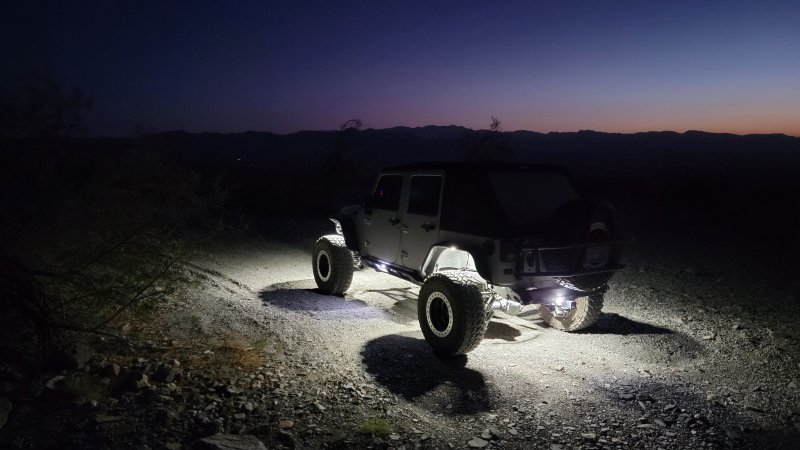
Dark sky quality is measured on the Bortle scale — 1 is the darkest possible, 9 is a heavily light-polluted city center. For meaningful Milky Way viewing you want Bortle 3 or better (rural to truly dark). In the Mojave corridor, Bortle 2–3 conditions are accessible in several areas.
Mojave National Preserve, CA — the Mid Hills and Hole-in-the-Wall areas reach Bortle 2 conditions on moonless nights, particularly toward the southern and eastern sections away from the Baker/Barstow glow. The elevation (4,000–5,000 ft in the mid hills) helps. The Kelso area is slightly brighter due to the Union Pacific rail corridor but still very dark.
Death Valley National Park, CA is a certified International Dark Sky Park. The Racetrack Playa (high-clearance required, 27 miles of washboard one-way) is remote enough to be truly spectacular. Mesquite Flat Dunes near Stovepipe Wells are accessible by pavement and still produce excellent dark sky conditions because of the sheer distance from city light sources.
Nevada Basin and Range — virtually anywhere in central and southern Nevada more than 50 miles from a population center produces exceptional dark sky. The area around Beatty, NV (gateway to Death Valley from Nevada), the Amargosa Valley, and the basin and range between US-93 and US-95 in southern Nevada are all consistently Bortle 2–3. Several of the spots in our hidden gems guide double as excellent dark sky camps.
Pro Tip
Moon Phase: The Variable That Matters Most

Dark sky quality is only half the equation. A full moon washes out the Milky Way as effectively as a small city’s light dome. Plan astrophotography and serious stargazing trips around the new moon window — the five to seven days before and after new moon when the moon is either below the horizon most of the night or a thin enough crescent to be irrelevant.
The free app PhotoPills (or the simpler Moon app) shows moonrise and moonset times, phase, and the Milky Way position for any date and location. Useful for planning which nights during a multi-day trip will have the best conditions. The core of the Milky Way is highest in the sky from June through September in the Northern Hemisphere — summer trips to the Mojave corridor for dark sky viewing overlap with the hottest months, which means high-elevation camps (Mojave National Preserve mid hills, the Spring Mountains above 7,000 ft) are the right call.
What to Bring
For casual stargazing — lying on a sleeping pad looking up — you need nothing but a dark site and a moonless night. The naked eye shows thousands of stars in Bortle 2 conditions, the Milky Way clearly, and occasional satellites and meteors without any equipment.
For Serious Viewing
The desert at 2am under a Bortle 2 sky is one of those experiences that’s hard to explain to someone who hasn’t had it. Just go far enough out and stay late enough to find out. If you’re new to desert camping, the trail etiquette basics — especially around quiet hours and campfire behavior — are worth knowing before you show up at a shared BLM site.
